Seasons of the Aegean
Words and Photos: Aylin Graves
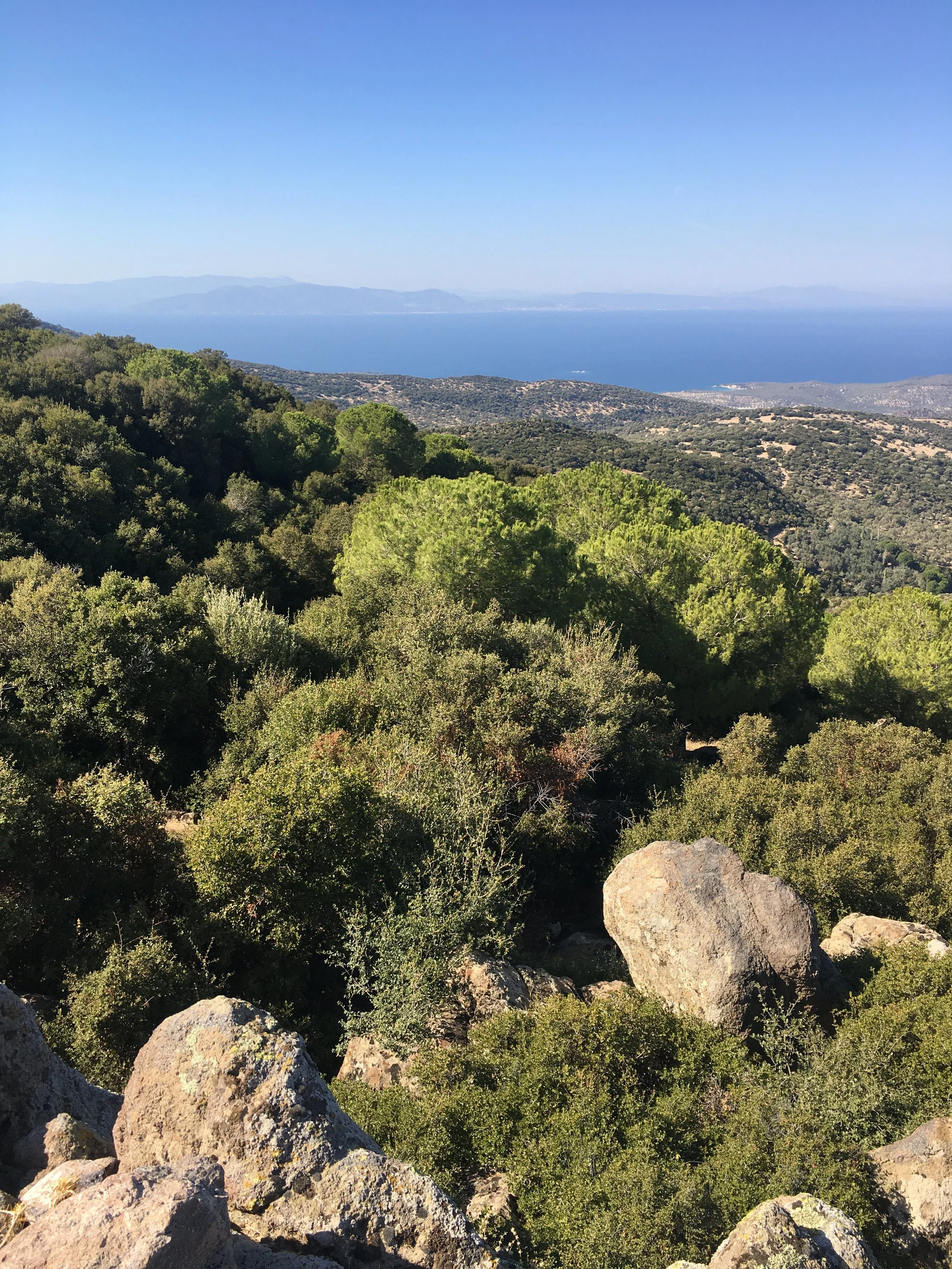
When I first came to live by the sea, I didn’t quite know what to do with the silence. After the noise of city streets, after decades of rushing toward classrooms, meetings and deadlines, the stillness of Aegean mornings felt impossibly foreign. I came to live on the tip of a peninsula and, on most days, the only sound I heard was that of the wind outside my window, waves crashing on the rocks and, from time to time, the cry of a seagull from above. It was early spring and the air in this sparsely populated stretch of coast already smelled of salt and wildflowers. I remember not knowing what to do with the idleness, the unfamiliar rhythm of unhurried, calm days. I remember feeling what faintly resembled embarrassment.
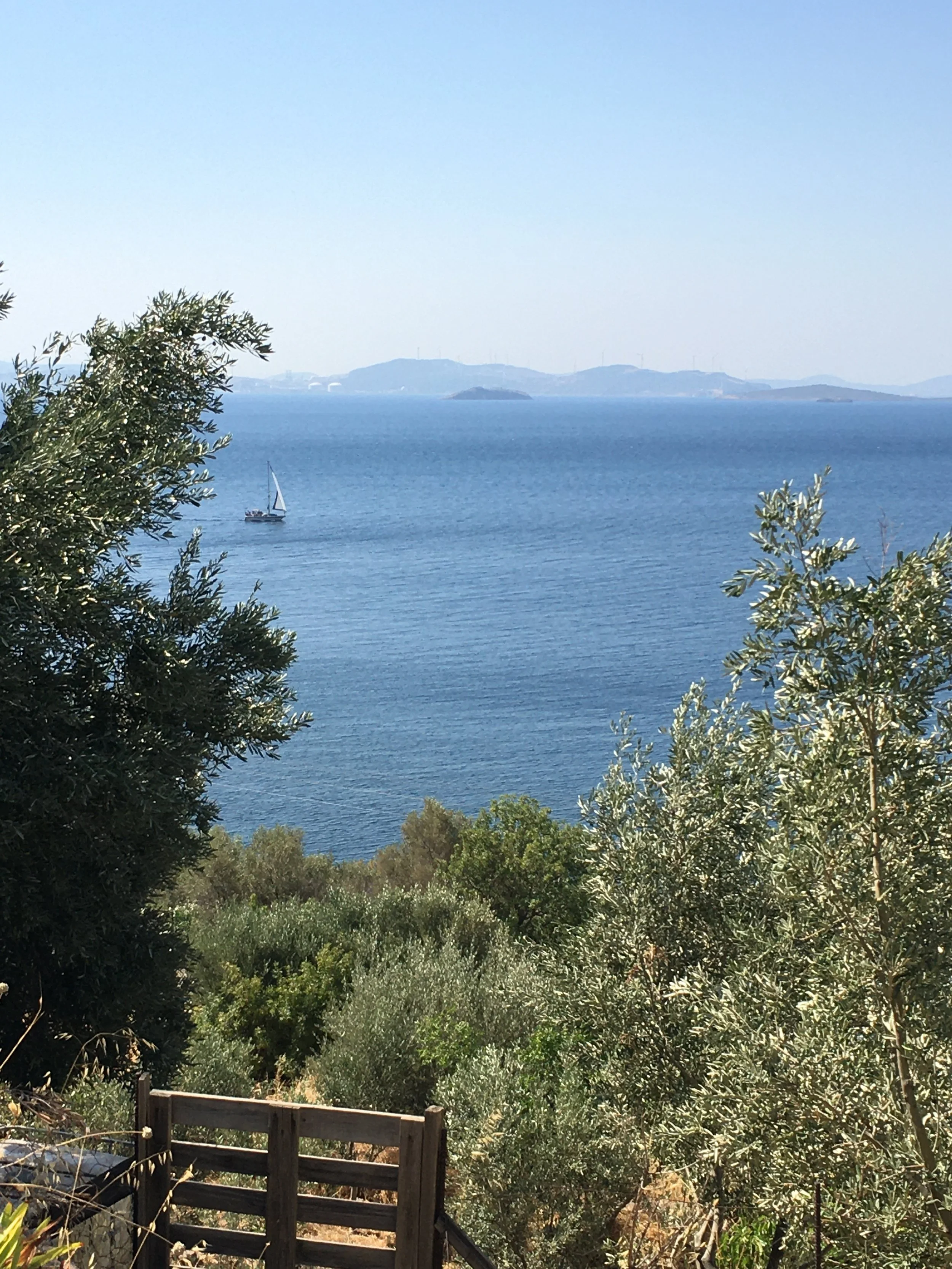
Then, on my endless morning walks, the olive trees started to talk to me. They stood in the distance like silver green statues against the blue, their thin, pointy leaves glimmering, swaying under the morning sun. I watched as the groves awakened to spring. Men started to move through them with baskets, pruning branches. They say here that the olive tree should be expansive enough for a bird to fly through it. I watched as they made space for the hypothetical birds and for the new growth. There was a ritual in the repetition of their hands touching the bark, eyes tracing familiar lines on it, the heart remembering what to keep and what to let go. With this experience, I began to understand what it means to live seasonally, not just to allow change but to shape and be reshaped by it.
Slowly, small white flowers started to adorn the branches. By early summer, the poyraz had already started to cool the hillsides like a refreshing breath that would keep the trees alive through the long, hot summer. Later, the lodos wind came from the south, warm and heavy with moisture, bringing the sea air right into our houses through open windows and the white sheer curtains. I learned that the olive tree, like the human spirit, needs both winds. The cooling clarity that hardens it and the humid softness that nurtures it. When midsummer arrived with its persistent glare of fierce and holy light, the olives started to appear. The sea turned from turquoise to deep cobalt, and the horizon shimmied in the heat. The groves were thick with the heat and the sound of cicadas. The ground under my feet, dry and crackled. The air itself felt like a dense presence. Towards September, in the late hours, I used to walk through the groves to the beach to watch the crimson light dissolve into the Aegean, just like summer was dissolving into the next season.
With the autumn, the world around seemed to exhale. The holiday makers all left, leaving behind locked doors and silence. The days started to get shorter, cooler. The sun mellowed and painted the sea, the air and the land a dazzling golden hue. The starlings started to gather on wires, contemplating their passage to North Africa. Momentarily we felt a hush, a pause, and even got some rain. Before long though, olive picking time arrived. The vista in the groves changed one more time: Nets beneath the trees, ladders against twisted trunks, women’s laughter echoing across the groves. The roads became laden with trucks and tractors ferrying workers and their harvest from the orchards to olive oil factories. The season of picking, pressing and preserving the memories of summer had started. At the old olive press whose owner has since become a friend, I watched the first drops of oil fall thick and luminous into the tin containers, and then tasted oil from my own garden on some freshly baked rustic bread, an ancient Aegean tradition.
And then came winter. The sea grew heavy and dark, the olive trees stood bare and silver, their branches tracing patterns on the whitewashed walls of my living room in the pale morning sun. I could still spend most of my days outdoors, either walking the dogs on the beach or having a cup of tea in the local coffee house facing the sea. On rainy days, I mostly stayed indoors and tried to learn traditional crafts like knitting or crocheting from Youtube. Evenings meant sitting across the wood burner with my husband, sipping a glass of homemade red and reading. In these moments, the silence felt natural and peaceful, not an absence but a grace. In my former life, I did not like winters as I perceived them to be the end of something, a sorrow. Here, in this more organic life, I came to understand time as a circular entity, not a linear one. Winter, then, is not an end but only a pause, a season of rest, a preparation for what is to come next.
I am now approaching my fifth year of living in the Aegean. The seasons turn, the light changes, and the same poyraz and lodos blow through the olive leaves, whispering the same ancient story: everything ends, everything begins again.
Aylin is a bilingual educator, writer, and poet living on the Aegean coast of Turkey. Her English stories and poems have appeared in Trafika Europe, the Found Poetry Review, Saccharine Poetry, and Harana Poetry.
She spends her days walking her two dogs on the beach, sea glassing, watercolor painting, and writing. She shares visual stories of her coastal life at @aylinintheaegean.